
Card Counting in the Modern Blackjack Battlefield
Card counting has come a long way since the early days when single-deck blackjack and generous rules gave sharp players an undeniable edge. Back then, everything was simpler: fewer decks, deeper penetration, slower games, and casinos that hadn’t yet figured out what to do with advantage players.
Today’s world looks different. Multi-deck shoes, continuous shuffle machines, and tech-enhanced surveillance are the new normal. But despite all of that, card counting remains alive and well — especially in Canada — and in many ways, players today have more tools, more information, and more opportunities than ever before.
Let’s break down how card counting used to be, how it works today, and why the game still hasn’t died despite decades of predictions.
The Old Days — When Ed Thorp Broke the Game
The concept of card counting became mainstream in the 1960s when mathematician Edward O. Thorp proved that blackjack wasn’t just a casino attraction — it was a game you could beat with skill and strategy. His research laid out the foundation for modern systems: tracking high vs. low cards, adjusting bets based on advantage, and modifying strategy depending on deck composition.
In those early years:
Single-deck blackjack dominated.
Players often got full-deck penetration.
Casino surveillance was minimal compared to today.
Counting systems were more complex, but the game conditions compensated for it.
With such favorable rules, even a rough approach gave players a real edge. But as the public discovered that blackjack was beatable, casinos responded with multi-deck shoes, earlier shuffles, and closer monitoring.
Yet the game remained beatable — just different.
Card Counting Today — Harder Rules, Better Tools
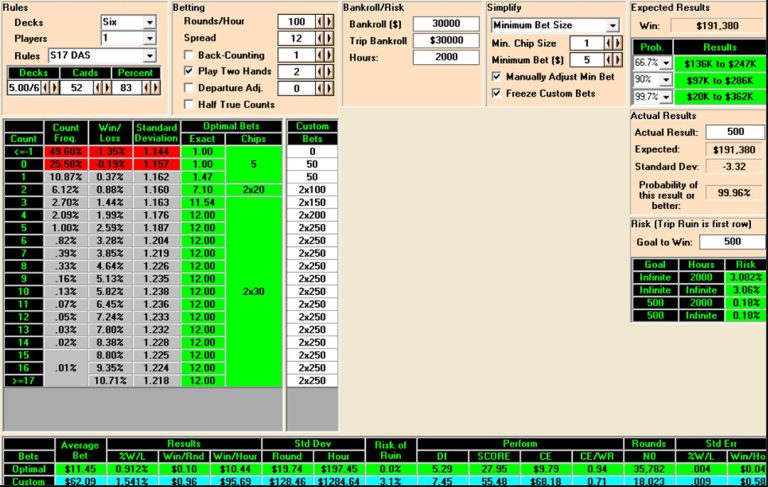
Fast forward to today, and the environment has changed dramatically:
4-, 6-, and 8-deck games are now the norm.
Many casinos use H17 rules, late surrender, or weaker payouts like 6:5 blackjack.
Surveillance departments have access to facial recognition and automated analysis tools.
But here’s the twist:
Modern players have advantages the old-school legends never dreamed of:
Free online training simulators
Apps that drill speed and accuracy
Community forums and strategy groups
Publicly tested counts like Hi-Lo, Zen Count, Wong Halves, etc.
Thousands of hours of simulation data available to anyone
In other words, while conditions may appear tougher, a motivated card counter can become far more efficient, skilled, and disciplined than someone in the 1970s who never had access to this level of information.
And in Canada… things get even more interesting.
Canada — An Underrated Goldmine for Advantage Players

Here’s where personal experience comes in: Canada is quietly one of the best regions for modern card counting.
Unlike some regions where casinos are aggressive, hostile, or suspicious, Canadian casino culture tends to be polite, mild, and surprisingly welcoming:
Staff are often super friendly — even when they know you’re counting.
Backoffs are gentle, quick, and almost apologetic.
Many casinos still offer naturally beatable games with decent penetration.
One of my favourite discoveries was a tiny, gas-station-style casino with six decks and only half a deck cut off — an absolute dream. It wasn’t even listed on Google Maps when searching “casino near me.” To this day, the place is still beatable, quiet, and enjoyable to play.
This is one of the thrills of counting in Canada:
finding great blackjack conditions feels like treasure hunting, and once you find them, you can keep coming back.
And unlike full-time pros, part-time players like myself have a huge advantage:
I simply don’t play when the table energy is miserable.
If I sit down next to someone who looks like they’re about to wager their mortgage, or the whole table feels negative, I just walk out and return another day. My full-time friends aren’t bothered by this, but I prefer the game to be fun — not emotionally draining.
Counting for me is a hobby & part-time investment.
Why Card Counting Still Works — And Why It Isn’t Going Anywhere
Despite decades of predictions that counting would die out, here’s the truth. Why counting still works today:
The math hasn’t changed. High cards still help the player.
Casinos still need blackjack to attract players — they can’t eliminate it.
Surveillance budgets are stretched thinner than ever.
The number of casinos has increased, making it harder to track players globally.
Many floors simply don’t prioritize catching skilled counters.
As long as cards are dealt with predictable rules and card removal matters, there will always be a way to track the game’s changing advantage.
Modern counters may need to be more disciplined, more selective, and more technologically trained, but the edge is still real — and still beatable.
A Skill That’s Evolving, Not Extinct
Card counting today is different from the romanticized single-deck days, but it’s far from obsolete. In fact, it’s becoming more sophisticated:
More teamwork
More data-driven strategies
Better training tools
Smarter bet ramps
Cleaner deviations
More selective casino targeting
And in Canada, the combination of friendly staff, milder heat, and a surprising number of beatable games makes the modern era one of the best times to learn the craft.
Whether you’re playing part-time like I do — choosing only positive environments — or grinding full-time like many of my friends, the opportunity is still there.
As long as casinos deal cards, card counting isn’t going anywhere.
Final Thoughts
Card counting today isn’t harder — it’s just different. The old days offered easier rules but less knowledge. Today we have tougher rules but unlimited access to math, training, and community.
For Canadian players in particular, the game is alive, profitable, and surprisingly welcoming.
And until the day casinos require microchips to stop us (which I’ll gladly pass on), the art of card counting will continue to thrive for anyone willing to learn it properly.