
A Blackjack Losing Streak can test your patience, discipline, and bankroll management more than anything else in the game.
Understanding your long-term edge in Blackjack is the foundation of surviving — and thriving — especially during a losing streak.
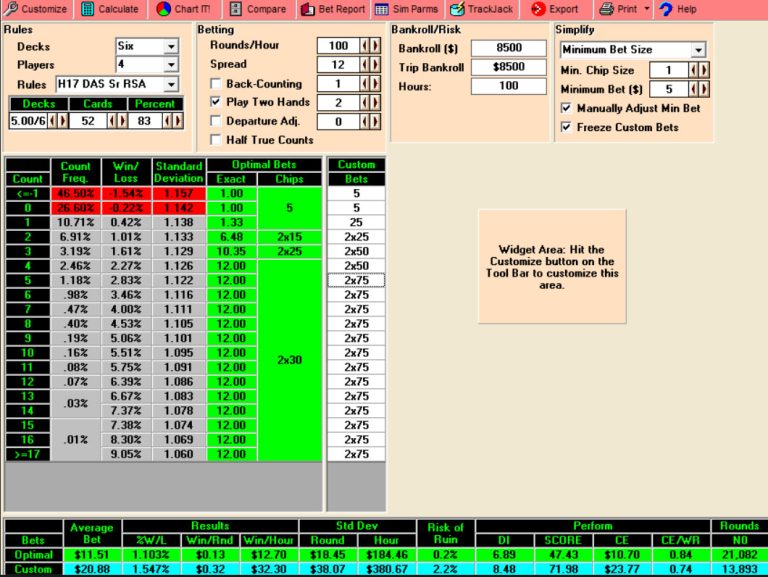
Understanding The Variance
Just like a stock portfolio, your bankroll will face downswings. The key is to avoid reacting emotionally to each dip.
If you’ve been trained and tested as a near-perfect counter, your job is not to outguess the cards — it’s to execute. Your advantage only materializes over the long term, across thousands of hands. You can’t control when you’ll hit a rough blackjack losing streak, but you can control how you respond to it.
Think of your blackjack bankroll like an investment account. You wouldn’t check your stock value every minute — and you shouldn’t panic every time you lose ten hands in a row. The only way the math plays out in your favor is by staying consistent.
Under-Betting: Being Scared To Put Out The Big Guns
Fear often leads players to under-bet after a few losing sessions. But under-betting is where a large portion of your edge disappears.
Your maximum bet exists for a reason. When the count calls for it, you have to be willing to put it out. Many players sabotage their long-term win rate by failing to get enough money on the table when the odds swing in their favor.
I once met a counter who was using a 1–4 spread on a poor quality double-deck game. He was afraid to bet $100 when it counted. He was playing “not to lose,” and that’s exactly what was happening. Advantage play demands courage in execution, not recklessness — but fear-based betting kills your edge faster than variance ever will.
Accepting the Reality of Losing Streaks
Ten losing hands in a row? It’s not just possible — it’s probable. With splits and doubles, a few bad rounds can swing several thousand dollars, even at $250 max bet (playing perfectly).
A Blackjack Losing Streak doesn’t mean you’ve lost your skill. It means you’re experiencing the natural volatility of the game. Look at any graph of coin flips — streaks and anomalies are part of the process. The key is not to chase losses or inflate bets emotionally. Over-betting destroys bankrolls faster than any “cold shoe”.
Readjusting After Major Bankroll Drops
If you’ve lost 20–30% of your bankroll, it’s time to recalculate. Readjusting your bet spread isn’t a sign of weakness; it’s survival strategy. The game doesn’t care about your past losses — only about what you bring to the next session.
Protect your longevity. Play smaller if needed, recover gradually, and rebuild. Many top pros have been through severe downturns. What separates survivors from quitters isn’t luck — it’s the discipline to adjust and continue.
Perspective: Blackjack vs. Traditional Investments
The average S&P 500 return is about 9% per year. That’s solid. But blackjack, when played correctly, compounds faster — often hourly. The trade-off is volatility. You’ll experience wild swings, but the long-term expectation remains positive.
If you treat blackjack like a business — with controlled risk, sufficient capital, and emotional discipline — your “returns” will come faster and stronger than most investments ever could.

Final Thoughts: Building Character Through the Grind
A Blackjack Losing Streak can be brutal, but it’s also a teacher. The emotional resilience you develop will outlast any bankroll.
This is not a short-term game. It’s a long-term adventure filled with strange encounters, late-night sessions, and moments that test who you are. If you stay disciplined and play through the variance, the person you become will be worth far more than the money you win.